

There are so many talented photographers who know they’re great at what they do, yet they’re still struggling to get consistent bookings. It’s not because their work isn’t strong or because they don’t care about their clients. People simply aren’t finding them.
Most photographers have heard of SEO, but it can feel confusing and overwhelming, and there’s so much advice online it’s hard to figure out what will actually work. They’re told they should be blogging regularly to grow their traffic, which adds even more pressure!
Some photographers try blogging and see no results. Others avoid it altogether because it feels like too much to figure out.
I totally get it! Blogging without a strategy is incredibly frustrating! It can feel like you’re putting in hours of work with nothing to show for it.

I’m Taylor, a photographer turned SEO specialist, and I help wedding and portrait photographers turn their websites into traffic machines so they can attract dream clients through SEO and blogging.
The goal here is to simplify everything and show you how blogging can actually work for you when you approach it the right way.
Why Your Blog Isn’t Booking Clients
If you’ve tried blogging before and felt like it didn’t work, you’re not alone! Most photographers I work with already have blogs filled with beautiful images and thoughtful writing, but those posts aren’t getting seen. They’re just sitting on their site without bringing in traffic or inquiries.
The issue isn’t blogging itself, but it’s the lack of strategy behind it.
One of the biggest reasons a blog doesn’t get seen is not using keywords. Many photographers write blogs based on what they want to share rather than what people are actively searching for. A post like “couple’s spring engagements photos” might feel meaningful, but it’s not something potential clients are typing into Google. On the other hand, a topic like “best wedding venues in Portland” directly matches a real search and gives your blog a chance to rank.
If you’re unsure what keywords you should even be targeting, this guide on best SEO keywords for wedding photographers breaks it down in a really practical way.
Another common issue is the structure of a blog. Even well-written blogs can go unnoticed if they aren’t organized in a way that search engines like Google and ChatGPT understand. Without clear headings, intentional keyword placement, and internal links, search engines struggle to figure out what your content is about. When that happens, your blog simply doesn’t get shown to people because search engines can’t figure out what it’s about.
There’s also the conversion piece, which is often overlooked. Getting someone to read your blog is only part of the goal, but if your content doesn’t build trust, guide them to your services, or give them a clear next step, they’ll leave without taking action.
This is where your website as a whole matters too. It’s not just about getting traffic. It’s about what happens once people land on your site. If you want a deeper look at how SEO and your website work together to turn visitors into inquiries, this guide on SEO for photographers is a great next step.
Without a clear strategy, blogging becomes more of a content dump than a marketing tool.
If you’ve done any of these things, it just means you haven’t been shown how to blog strategically yet, and that’s where I come in!
Why is Blogging Such a Powerful SEO Strategy
When blogging is done with intention, it becomes one of the most powerful tools in your marketing. Here’s why it’s such an important part of a great SEO strategy:
Blogging helps you rank for more keywords
Your homepage can only rank for so many keywords, and your blog gives you the ability to show up for many different searches, taking different angles and sub-topics to a new depth. Each post means another opportunity for someone to find your website, whether they’re looking for venues, locations, or specific photography services in your area.
You’re showing up when people are actively searching
Blogging also helps you show up when someone is searching for you (vs. randomly showing up in their feed when they’re getting ready to fall asleep). When a person types something like “best engagement photo locations in Portland,” they’re already in the planning phase. If your blog appears in those results, you’re meeting them right when they need help, which naturally builds trust.
That trust continues to grow as they read your content. When your blog answers their questions and demonstrates your experience, you position yourself as the expert. By the time they reach out, they already feel confident in your work!
It builds authority and trust
In addition to building trust with potential clients, blogging also change how Google views your site. When you consistently create content around your niche, you build what’s called topical authority. This means you’re not just writing one-off posts, but covering your subject in depth, and showing that you are an authority in your main topic.
For example, instead of only writing one blog about wedding venues, you might also create posts about engagement locations, timeline planning, getting married in your area, and specific venues in your area. Over time, Google starts to recognize that your site is a reliable and expert source for that topic.
The more helpful, relevant, and interconnected your content is, the more likely Google is to rank not just one blog, but multiple pages across your site. This is how photographers start to consistently show up on page one!
It compounds over time
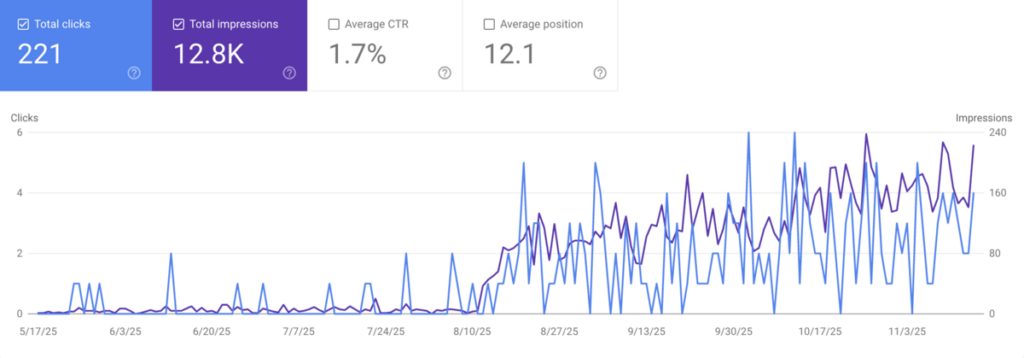
Another reason why SEO is one of the best marketing strategies for photographers is how blogging compounds over time. Unlike social media posts that quickly fade, a well-optimized blog can continue bringing in traffic for months or even years.
The key is understanding that just the act of blogging alone doesn’t create results: strategic blogging does.
The 5-Step Process for Blogs That Rank and Convert
For an effective blogging strategy, you need a clear and repeatable system. Let’s get into the steps:
Step 1: Choose Strategic Topics
Every blog you write should have a purpose. Your topics should connect to your services, reflect your expertise, and align with what your ideal clients are actually searching for.
As you build more blogs around similar topics, you start creating clusters of content. This is what strengthens your topical authority and helps Google see your site as a go-to resource for your niche.
Step 2: Do Keyword Research
Before writing, you need to understand how and what people are searching for. For photographers, this often means focusing on location-based and service-based keywords. Think about how your clients would naturally search when they are planning.
Use a keyword research tool to check what people are searching. Your goal is to find keywords that people are actually searching, but that are still realistic for you to rank for.
When choosing keywords, look for:
- Clear intent (you can tell what the person wants)
- Decent search volume (people are actually searching it)
- Lower to moderate competition or difficulty (you have a chance to rank)
Each blog can target a main keyword along with a few related variations. This helps you rank for multiple searches with one post and builds more depth in your content!
Step 3: Write and Optimize Your Blog
Once you have your topic, the writing itself should balance clarity and optimization. Your blog needs to be easy to read, well-structured, and naturally incorporate your keywords. Adding clear headings and organized sections helps both your readers and search engines understand your content.
The key to a high ranking content = satisfying the searcher.
Step 4: Add Internal Links and SEO Elements
After writing, you’ll want to strengthen your blog with internal links and SEO elements.
Linking to your service pages and related blogs keeps readers engaged and helps guide them through your site.
You also want to make sure to add a descriptive page title and meta description, optimize your images, set a featured image, and make sure your content is relevant to the target keyword.
Step 5: Focus on Conversion
This is where your blog shifts from just being informative to actually bringing in inquiries. By sharing your experience, building trust, and clearly guiding readers toward the next step, you create a path for people to take the next step!

How to Start Blogging with a Strategy That Actually Works
If you’re reading this and thinking, “This makes sense, but I don’t want to do all of this myself,” you’re not alone.
Blogging for SEO isn’t hard, but it is a process. And most photographers struggle because they’re trying to piece it together on their own without a clear strategy.
That’s exactly why I created SEO Blogging Blueprint.
Inside the course, I walk you through everything step by step, from choosing the right topics and keywords to structuring your posts, optimizing them for Google, and turning them into content that actually brings in inquiries. It’s the same exact process my team uses with our management clients that consistently helps photographers get on page 1 and get leads from dream clients.
So instead of guessing what to write or hoping your blogs work, you’ll have a repeatable system you can use every time you sit down to create a post!
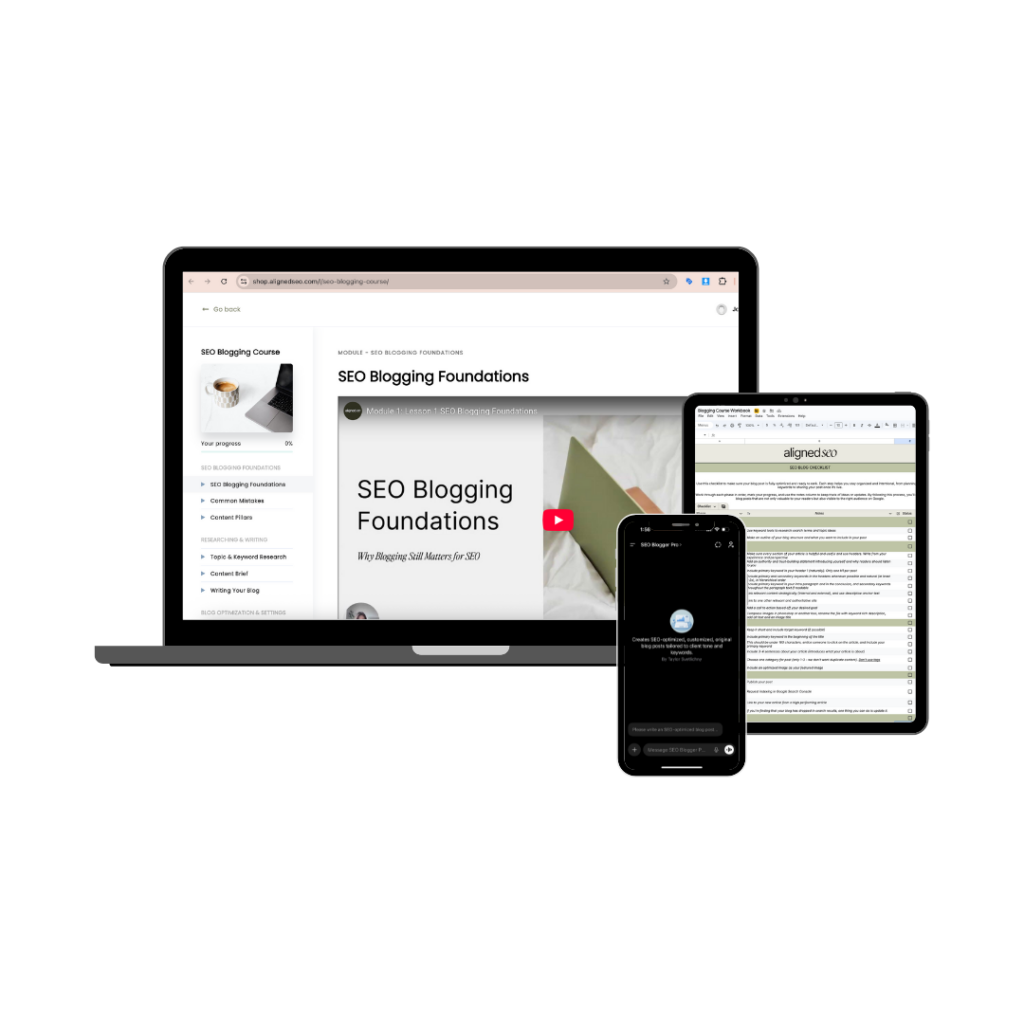
You can learn more about the course here: https://alignedseo.com/seo-blogging-blueprint
And if you’d rather have someone handle it all for you, I also offer monthly SEO management where my team and I take care of the strategy, content, and optimization for you!
Your Next Clients Are Already Searching
Your dream clients are already on Google right now. They’re searching for photographers, locations, ideas, and guidance as they plan their sessions or weddings.
Imagine consistently appearing in search results, getting inquiries without needing to post every day, and having clients who already trust you before they even reach out.
That’s what strategic blogging makes possible!
If you found this blog helpful, I would love to connect with you on Instagram!